
Custom porcelain veneers designed around your face, previewed in advance.
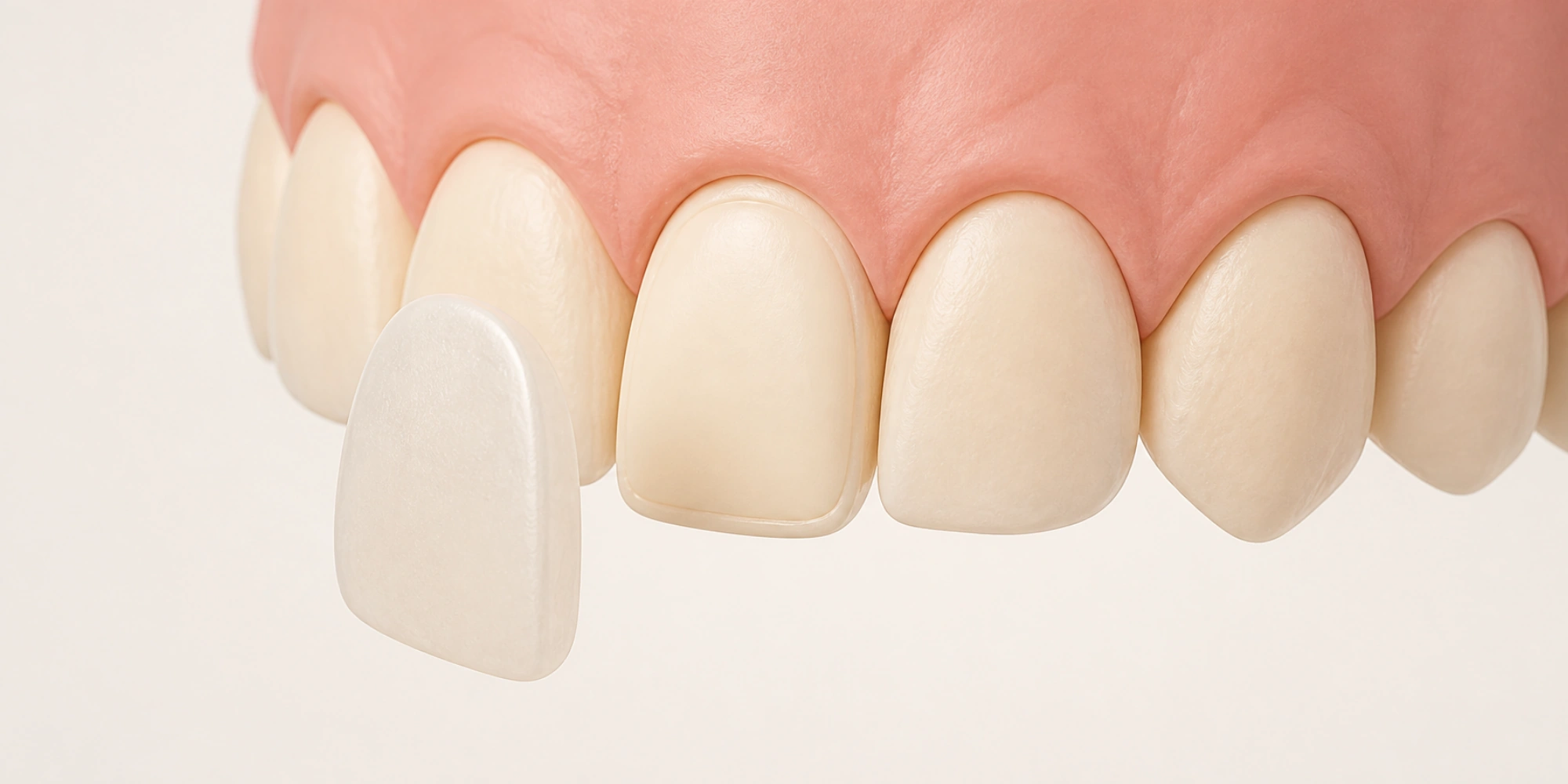
Custom porcelain veneers designed around your face, previewed in advance.
Porcelain veneers are thin ceramic shells bonded to the front of your teeth to change their color, shape or length. At L'Oris in São Paulo, Brazil, you see a digital design and a try-in mock-up before any work begins, usually in one trip.

Digital smile design of the proposed look

Try-in mock-up you see and approve first

Minimal preparation when your case allows

Dra. Cristina, cosmetic training at NYU

Free days for São Paulo food and museums
You grind your teeth or have gum problems. Both are treatable, and treating them first protects your veneers.


A typical plan. Your written plan sets the exact days before you book.
Brazil's dental council (CRO) doesn't allow published prices. Your written plan lists each item and its cost, sent privately by email.
Video consultation and written plan · Digital smile design · Try-in mock-up · Porcelain veneers as planned · Follow-up by video
Whitening of other teeth · Gum contouring · Night guard for grinding
Flights and hotel · Meals and local transport · Brazil e-Visa fee · Travel insurance
Digital smile design: plans shape and length on screen.
Try-in mock-up: preview the design in your own mouth.
3D intraoral scan: no impression trays.
Teeth may feel sensitive for a few days after preparation. A veneer can chip with heavy grinding, so a night guard may be part of your plan.
U.S., Canadian and Australian citizens need an e-Visa for Brazil. Apply online 3–4 weeks before you travel.
Most international flights land at Guarulhos (GRU), about an hour away. Congonhas (CGH) is 15 minutes from the clinic.
Campo Belo, Moema and Itaim Bibi are close to the clinic, with hotels and short-term rentals.
International wire transfer or major credit cards. Terms are in your written plan.


An island escape a few hours from São Paulo great for unwinding.
It starts with an exam and a digital smile design, so you can see and try on the proposed smile with a mock-up before any tooth is touched. Then we prepare the teeth, usually with minimal reduction, take a 3D scan, and the veneers are made. At the final visit, we bond them and adjust your bite. Most cases take 2 to 3 appointments of about 90 minutes.
Veneers usually take 2 to 3 appointments, spaced over several days to allow for the lab work. Depending on your case, it can be done in one stay or split into two trips. The exact number of days in São Paulo depends on how many teeth are involved and whether you need other treatment first, like whitening or gum care. Your written plan shows the timeline before you book.
With good care, porcelain veneers stay in function for many years. How long depends on your habits: grinding, biting hard objects, gum health, and regular checkups all play a role. If you grind your teeth, a night guard helps protect them. We don't give a fixed number, because every mouth is different.
It's as safe as the dentist you choose. In Brazil, every dentist must be licensed by a regional dental board, and you can check a dentist's license and registered specialties online. Look for a careful exam, a preview of the result before any preparation, and a plan for follow-up after you go home. Dra. Cristina has post-doctoral training in cosmetic dentistry at New York University.
Most veneers are made from glass ceramics, such as lithium disilicate or feldspathic porcelain, chosen for their natural translucency and strength. The material, thickness, and shade are chosen for your case, depending on the color of the teeth underneath and how much you want to change. We pick the shade together with you, in natural light.
Yes. We use digital smile design to plan the shape and proportions of your new smile, then make a mock-up you can try on in your mouth before any preparation. This lets you see the result, ask for changes, and approve the design. The final result can differ slightly from the preview, and we talk about that openly.
Both are thin ceramic shells bonded to the front of the teeth. Ultra-thin veneers are even thinner and often need little or no tooth reduction, so they fit teeth that are already well positioned and need small changes in shape or color. Traditional porcelain veneers are a bit thicker and can cover darker teeth or bigger changes. Your exam decides which one fits.
Brush twice a day with a non-abrasive toothpaste, floss daily, and keep up your regular cleanings. Avoid biting hard objects like ice, pens, or fingernails, and wear a night guard if you grind your teeth. Porcelain resists stains, but the edges can pick up color from coffee and wine, so hygiene matters. You go home with written care instructions.
Three photos of your smile are enough to start.
The dentist reviews your case herself and replies within 2 business days, in English.